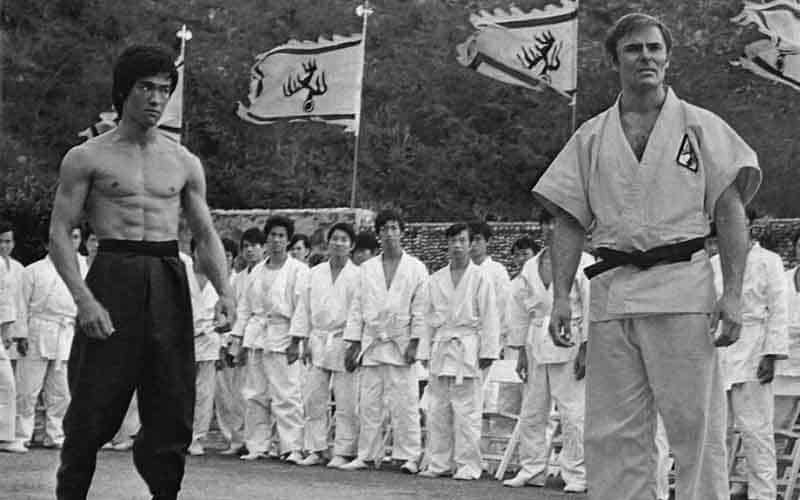
In 1973, International superstar Bruce Lee passed away at the young age of 32, leaving a permanent gap in the world of martial arts. Weeks after his death, Lee’s most significant contribution to cinema was released: Enter the Dragon.
In the film, Lee works with a government agency to infiltrate a fighting tournament hosted by a criminal overlord, “Han,” on his private island. His goal is to find a missing woman, but also get revenge against Han, whose goons caused the death of his sister.
Once at Han’s island, Lee befriends Roper, a middle-aged playboy and gambler played by John Saxon. Roper is on the run from mafia types who want to collect on old debts, likely stemming from a losing streak at the tables or with the bookies.
Sports Betting In Enter The Dragon
Enter the Dragon qualifies as a sports betting movie because of Roper. Throughout the early portions of the film, it becomes evident that he is addicted to gambling.
He has amassed a large debt with criminal types that forces him to keep a low profile, yet he continues to place bets with low odds and poor chances of winning.
Golf Bet Scene
When we first meet Roper, he is playing golf and is approached by mob enforcers demanding repayment of his debts, stating that he owes “$175 big ones by Monday the 15th.”
He attempts a difficult shot amid the pressure of high-stakes golf betting, bantering about “double or nothing, that’s about a thousand bucks a foot.” Roper misses the shot, but with no intention to pay, he keeps his cool.
Thanks to Roper’s karate training, he can fend off the bad guys, but with pressure mounting, he decides to bet on himself and enter Han’s tournament.
Betting Scams
Roper encounters an old Vietnam War buddy, Williams, played by Jim Kelly, who has also entered the tournament. Once the martial arts tournament begins, Roper and Williams start collaborating on a series of scams to earn an easy buck from sucker bets.
Both fighters intentionally perform poorly in the beginning moments of the bout to convince gamblers that they are likely to lose. Because of this, their likelihood of winning plummets, allowing betters to get a better payout by betting on Roper or Williams when they earn the “upset” victory.
This is comparable to a superior boxer deliberately performing poorly in the early rounds so that his moneyline odds will rise. Once the target odds are reached, everyone in on the scam places their bets.
Roper earns a nice payout by running the scheme on a sucker bettor during a Williams fight. When the tables turn, and it is Roper’s turn to look like a loser, the same bettor from before holds out as he is now less anxious to get in on the action.
This comedic turn causes Roper to take an excessive beating from a rookie combatant. Williams eventually lures the gambler in for a wager, and they complete the scam a second time.